Confused about full grain leather and top grain leather for custom leather bags? This guide covers durability, texture, price, OEM usage, and which material suits your wholesale business travel bags.
Main Text
Introduction
When you source leather bags from Baigou manufacturers for wholesale, the two most popular leather types you will encounter are full grain leather and top grain leather. Many overseas buyers, including boutique store owners, fashion brand operators and bulk importers, struggle to tell the difference between them. Choosing the wrong leather material will affect your product lifespan, customer satisfaction, resale price and overall profit margin.
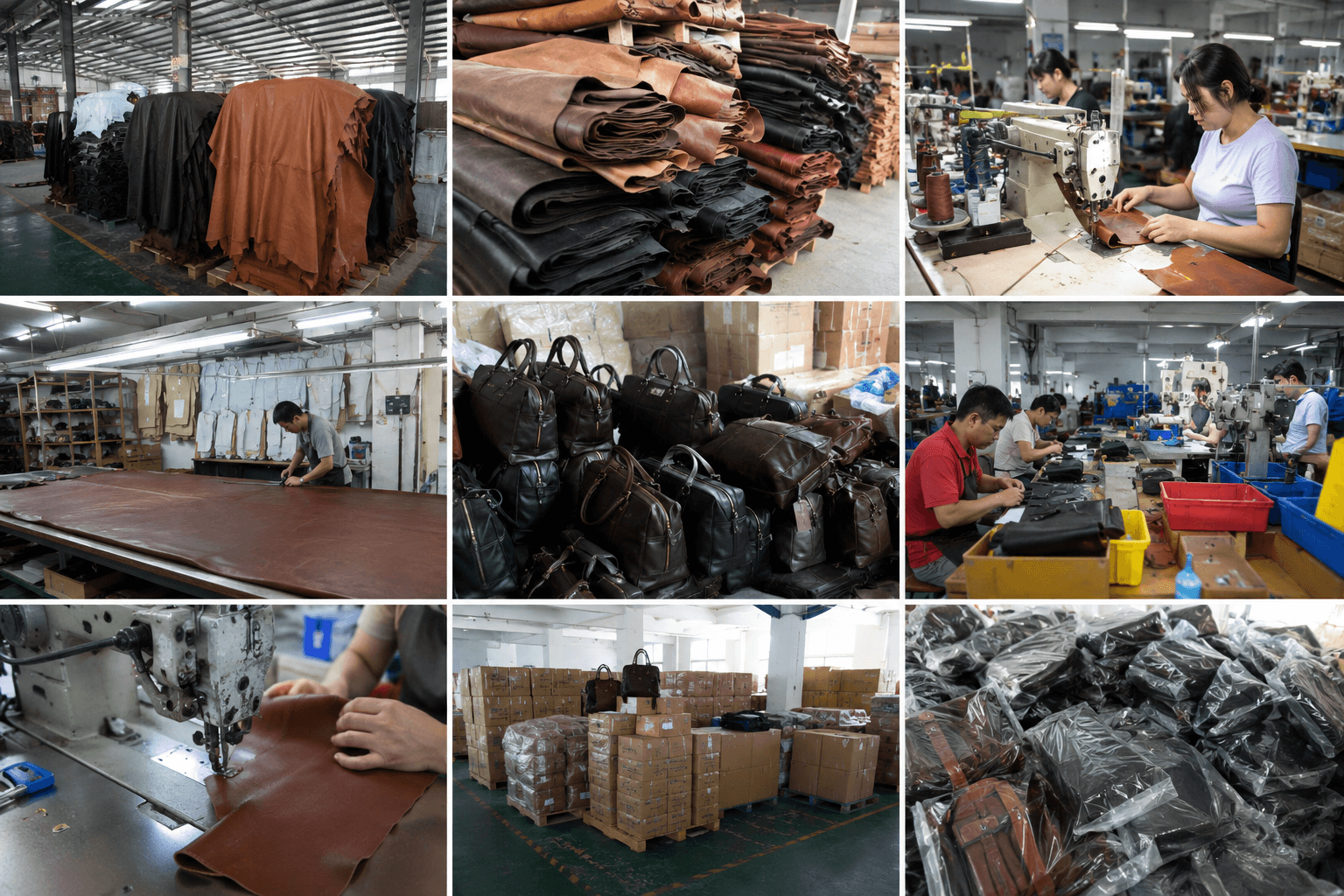
As a professional OEM & ODM leather bag factory with over 10 years of production experience, we process thousands of leather hides every month for business backpacks, travel duffel bags, handbags and briefcases. In this article, we will break down every difference between full grain leather and top grain leather, including surface features, durability, maintenance, cost, and suitable custom bag styles, to help you make smart purchasing decisions for your brand.
1. What Is Full Grain Leather?
Full grain leather is the highest quality grade of natural leather. It uses the complete top layer of cowhide without any sanding or buffing to remove natural imperfections. The hide retains its original grain pattern, natural pores, minor scars, brand marks and subtle color variations from the cow.
Manufacturers only wash, tan and condition full grain leather, without heavy surface correction. The intact grain structure makes the leather breathable, flexible and extremely long-lasting. With regular use, full grain leather develops a unique patina over time. Patina is a warm, glossy aged texture that makes each bag one-of-a-kind, which is highly valued by high-end fashion consumers.
Key advantages of full grain leather
1. Ultra-long service life: A well-made full grain leather bag can last 10–20 years with basic care.
2. Natural breathability: Air passes through leather pores, preventing mold and sweat buildup inside bags.
3. Beautiful patina effect: The leather darkens slightly and forms a smooth vintage look after months of daily use.
4. Strong tensile strength: Resists tearing, stretching and surface scratches better than corrected leather.
Disadvantages of full grain leather
1. Higher raw material cost: Full grain hides with few blemishes have a much higher wholesale price.
2. Natural surface marks: Small scars or insect bites are visible on the leather surface, which some mass-market customers dislike.
3. Longer production time: The tanning process for full grain leather requires more steps to soften raw hides.
Best custom bag styles for full grain leather
High-end business briefcases, luxury travel leather duffels, premium men’s messenger bags, designer handbags and vintage laptop backpacks. These products target mid-to-high-end retail markets with higher selling prices.
2. What Is Top Grain Leather?
Top grain leather is also made from the top layer of cowhide, but factories sand and buff the original grain surface to erase natural flaws like scars, wrinkles and uneven spots. After sanding, a thin artificial grain coating is pressed onto the smooth leather surface to create a uniform, flawless texture.
This correction process eliminates irregular marks, so top grain leather looks neat and consistent across every bag in a bulk order. It is the most widely used material for medium-priced wholesale leather bags, balancing cost and appearance for mass retail brands.
Key advantages of top grain leather
1. Uniform perfect surface: No natural blemishes, all finished bags have identical smooth texture for unified brand display.
2. More affordable pricing: Raw top grain hides cost 30%–50% less than premium full grain leather.
3. Stain-resistant coating: The pressed surface layer blocks water and minor stains, easier for daily cleaning.
4. Stable mass production: Factories can source large quantities of top grain leather without quality inconsistency.
Disadvantages of top grain leather
1. No natural patina: The artificial surface coating stops the leather from aging into vintage texture.
2. Less breathable: The sealed coating covers pores, which may cause minor mold if stored in humid environments long-term.
3. Weaker long-term durability: The top coating may peel or crack after 3–5 years of heavy daily use.
Best custom bag styles for top grain leather
Wholesale business travel bags, daily office handbags, student leather laptop backpacks, promotional OEM gift bags and bulk wholesale luggage accessories for mid-range retail stores.
3. Core Comparison Table: Full Grain vs Top Grain Leather
1. Surface treatment
Full grain: No sanding, retains original natural hide grain
Top grain: Sanded flat + artificial printed grain coating
2. Natural marks
Full grain: Visible minor scars, wrinkles and color variation
Top grain: Zero natural flaws, fully uniform appearance
3. Patina formation
Full grain: Develops unique vintage patina over time
Top grain: No patina effect
4. Durability lifespan
Full grain: 10–20 years
Top grain: 3–6 years under frequent use
5. Breathability
Full grain: Excellent, open pores
Top grain: Poor, sealed surface layer
6. Wholesale material cost
Full grain: High-end price bracket
Top grain: Medium cost bracket
7. Target market positioning
Full grain: Luxury boutique, high-end designer brands
Top grain: Mass wholesale, medium retail, promotional custom orders
4. How To Choose Between Full Grain and Top Grain Leather For Your OEM Order
Choose full grain leather if:
• Your brand targets high-income customers who prefer vintage, premium leather goods.
• You sell long-lasting business travel bags with high retail markup.
• Your brand marketing highlights natural, eco-friendly unprocessed leather materials.
• You accept slightly higher production costs to boost product quality and customer repurchase rates.
Choose top grain leather if:
• You run bulk wholesale for supermarkets, online general stores or promotional corporate gifts.
• You need consistent, flawless bag surfaces for unified brand display.
• You have strict budget limits for raw leather materials and want competitive wholesale pricing.
• Your customer base prioritizes low maintenance and stain resistance over vintage patina texture.
5. Professional Maintenance Tips For Both Leather Types
Care for full grain leather bags
• Wipe dirt with a dry soft cotton cloth weekly; avoid harsh chemical cleaners.
• Apply natural leather conditioner every 3 months to keep hide flexible and prevent cracking.
• Store in dry, ventilated areas; use dust bags when not in use to avoid dust buildup.
• Minor surface scratches can be polished out with leather balm to enhance patina.
Care for top grain leather bags
• Clean light stains with slightly damp microfiber cloth, do not soak the leather.
• Avoid thick oil-based conditioners, which may damage the artificial surface coating.
• Keep away from direct high heat, such as car dashboard sunlight, to prevent coating peeling.
Conclusion & Wholesale Inquiry Guide
Full grain leather and top grain leather serve completely different wholesale market demands. There is no absolute "better" material — your brand positioning, target customer group and budget decide which leather fits your custom bag orders.
Our Baigou leather bag factory supplies both full grain and top grain leather OEM solutions. We provide free material sample delivery for global buyers to test texture, thickness and durability before bulk production. Our design team can adjust leather selection, hardware matching and logo embossing according to your market needs.
If you have any questions about leather material selection, MOQ rules, sample production or bulk order pricing, feel free to send us an inquiry via contact form or WhatsApp. Our multilingual sales team will reply to all messages within 12 working hours, supporting one-stop custom bag manufacturing from design to door-to-door shipping worldwide.